
Avenue Living Asset Management (ALAM) Digital Brand Guidelines
Role
UX/UI Designer
Timeline
21 Weeks
Tools
Figma
Adobe Creative Cloud
Overview
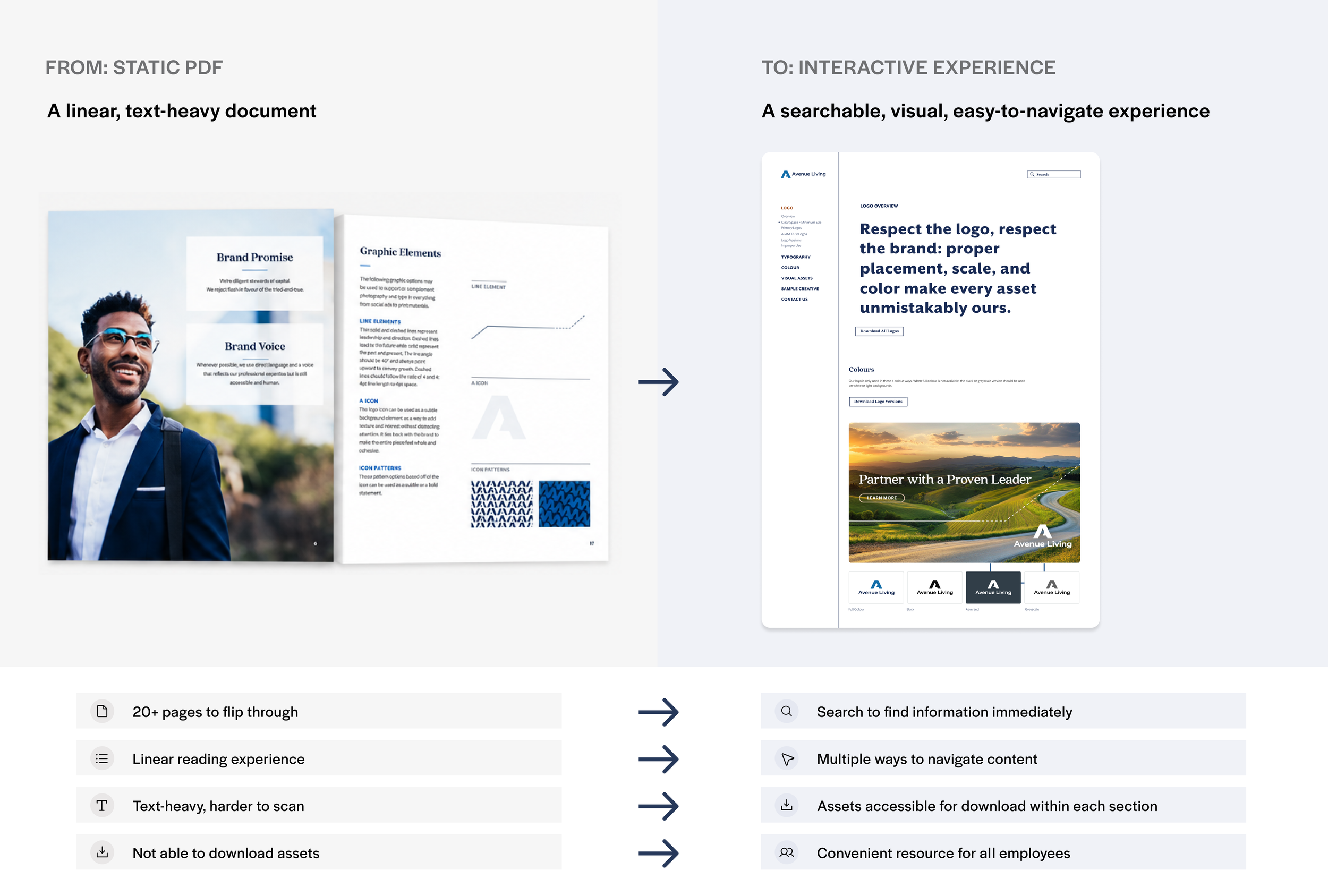
Avenue Living's Asset Management team relied on a PDF brand guideline that was primarily used within the design team. As more departments began creating event collateral, presentations, and marketing materials, there was a growing need for a centralized resource that made brand standards accessible to everyone.
The goal was to transform the static documentation into an interactive digital experience that not only housed brand rules and downloadable assets, but also helped employees understand how to apply the brand consistently in their own work.
Brand guidelines naturally contain a large amount of information; from logo usage and typography to photography, colour systems, and downloadable assets. The challenge wasn't simply moving a PDF online, but rethinking how people discover, learn, and reference that information.
The experience needed to remain clear and authoritative while feeling engaging enough that employees would actually use it. Every interaction had to balance visual creativity with usability, ensuring the guidelines stayed informative without becoming overwhelming or gimmicky.
The Challenge
Goals
Increase Accessibility
Make brand guidance available across the organization.
Ensure that employees outside the design team could easily access and understand brand standards without needing to rely on static documentation or direct support from designers.
Create a Single Source of Truth
Centralize brand assets and guidelines in one place.
Consolidate logos, typography, colour systems, and supporting assets into a unified digital platform, reducing fragmentation across files and improving consistency in usage.
Improve Discoverability
Help users find information quickly and intuitively.
Design a structure that allows users to efficiently locate specific guidance through search, navigation, and contextual linking, rather than scanning through a linear document.
Support Consistent Brand Application
Enable confident, on-brand execution across teams.
Provide clear rules and real-world examples to help non-designers accurately apply the brand across events, presentations, and marketing materials with minimal ambiguity.
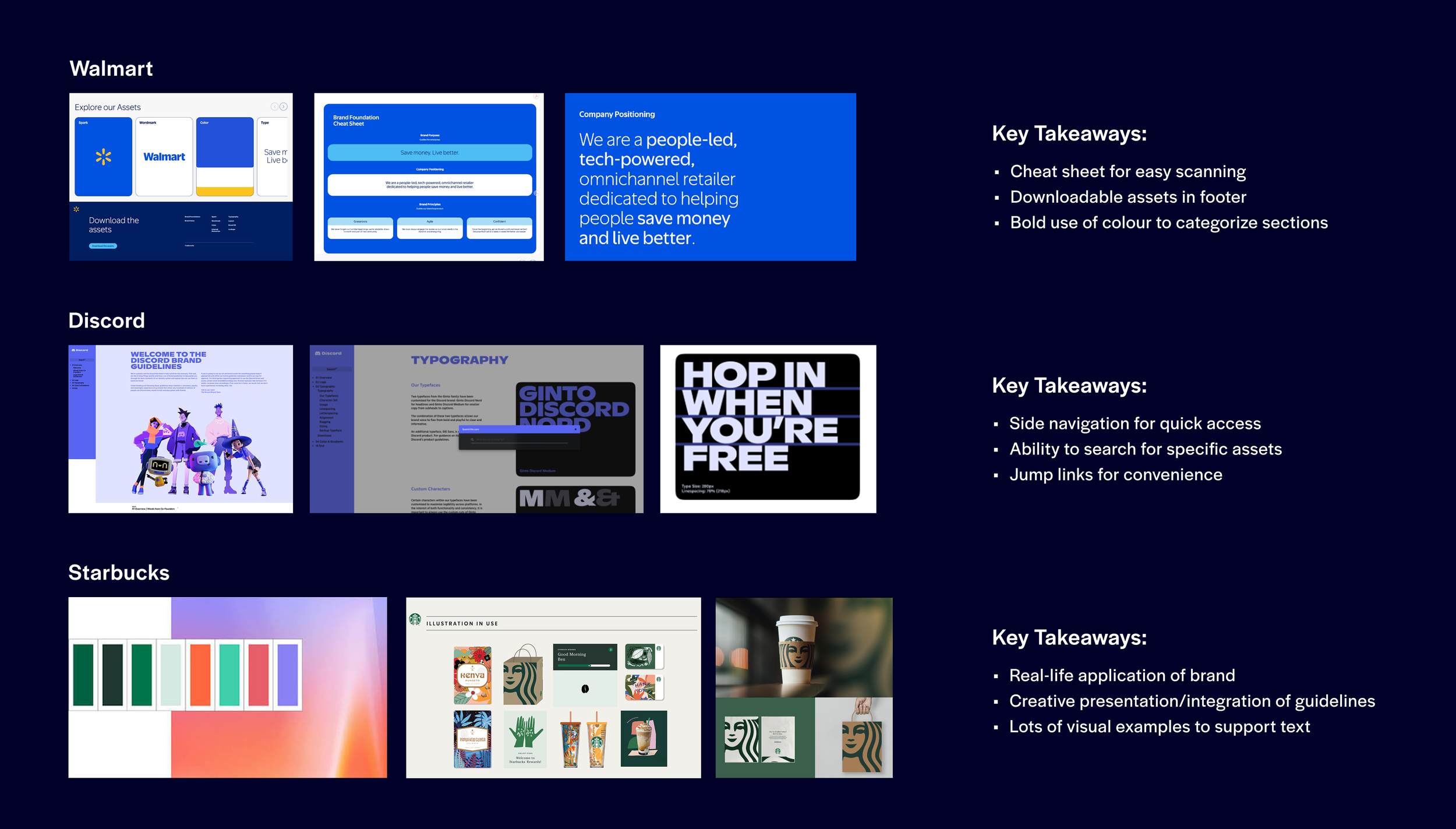
Since this project focused on translating documentation into a digital experience, I evaluated several industry-leading digital brand guidelines to understand common interaction patterns, content organization, and presentation techniques.
Rather than replicating existing solutions, I analyzed how different brands balanced readability, navigation, and visual engagement to establish best practices that could be adapted for Avenue Living.
Research & Inspiration
Information Architecture
-
![]()
Sitemap
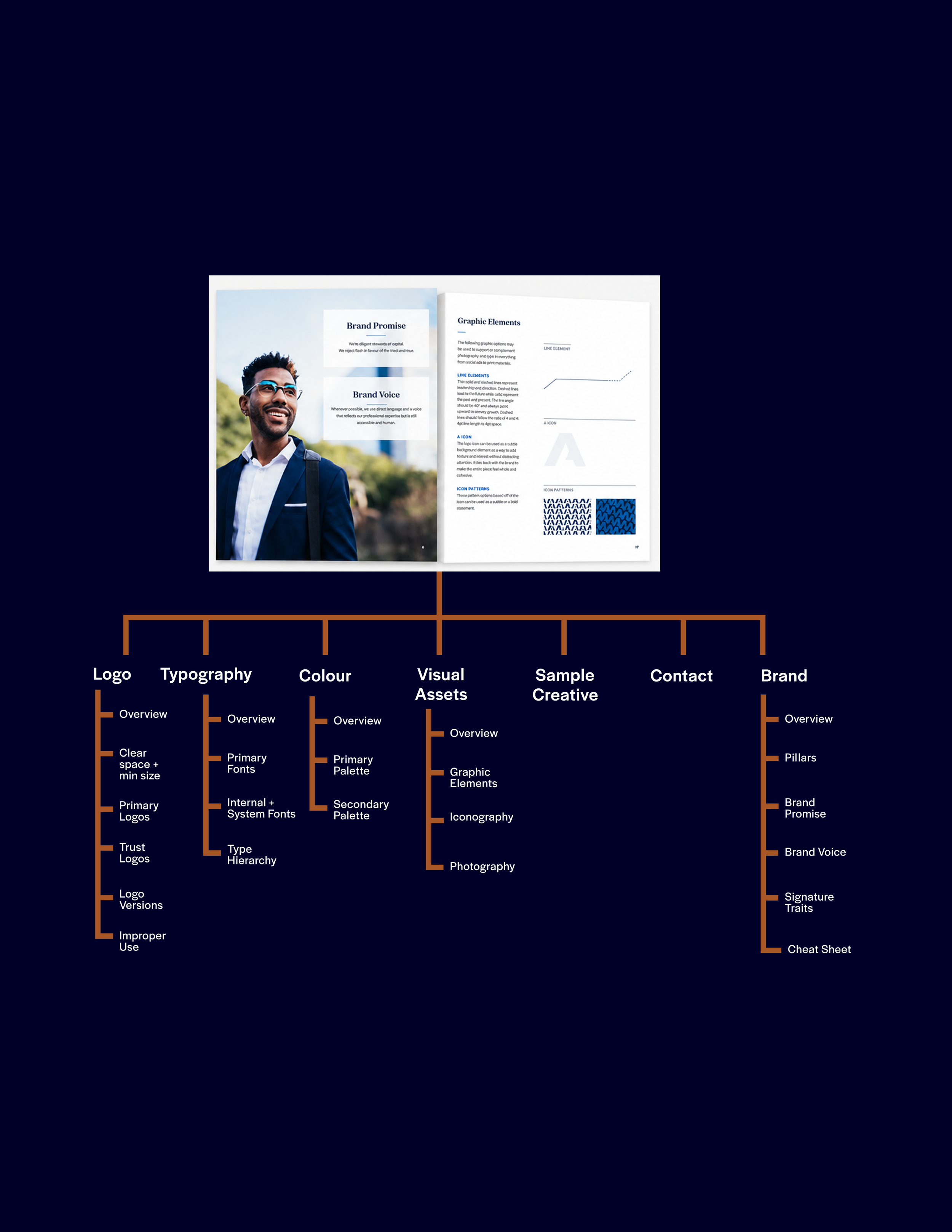
With a large volume of brand documentation to organize, defining the information architecture was a key first step. Working from an existing PDF, I restructured the content for a digital experience by consolidating and reorganizing information into a clearer hierarchy. The resulting sitemap grouped content into seven core sections with supporting subcategories, making it easier for users to understand where information lived and quickly navigate to what they needed.
-
![]()
Jump Links
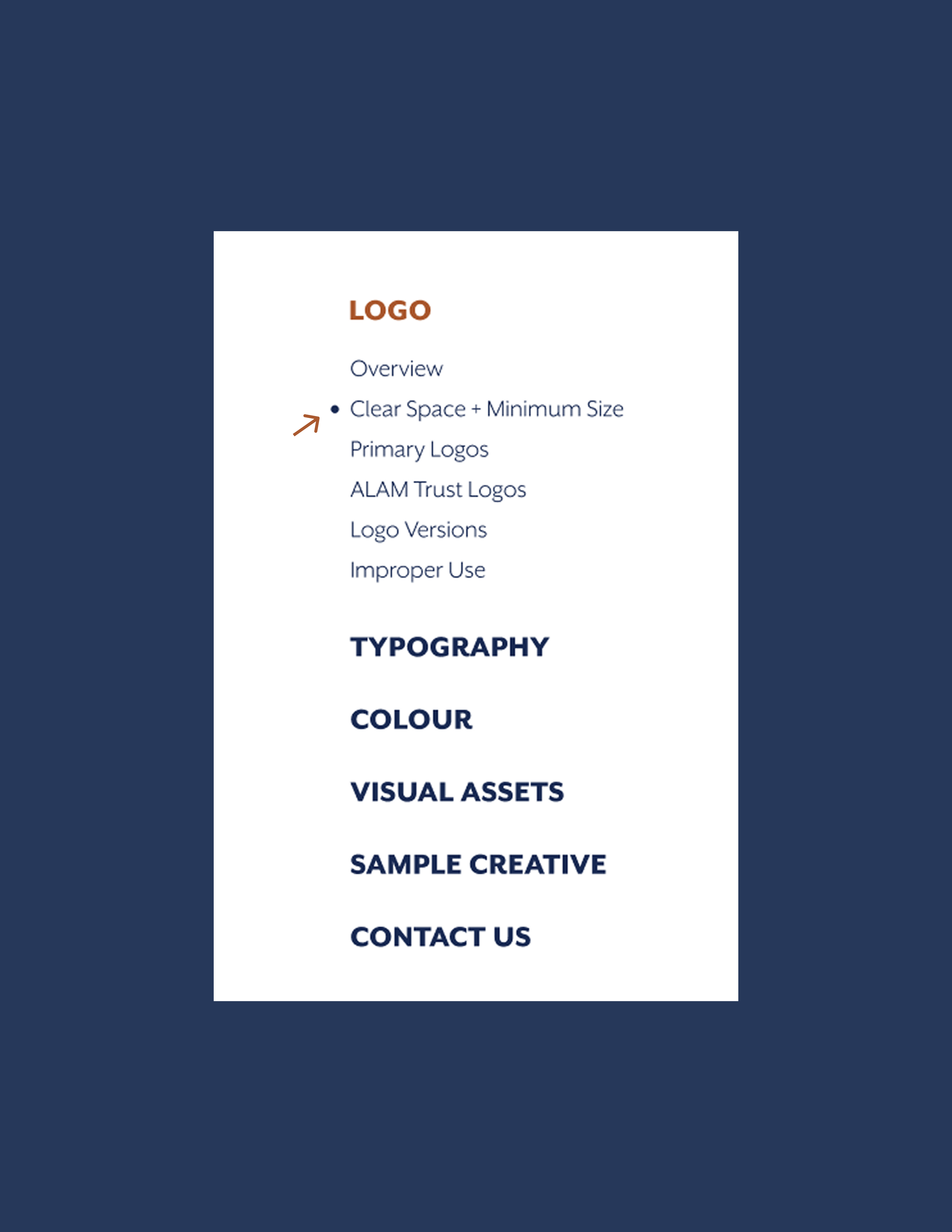
To support efficient navigation within each section, I incorporated jump links that allowed users to quickly move between subtopics without scrolling through lengthy content. This helped break down dense information into more manageable parts and made it easier for users to locate specific guidance while maintaining context within the broader section.
-
![]()
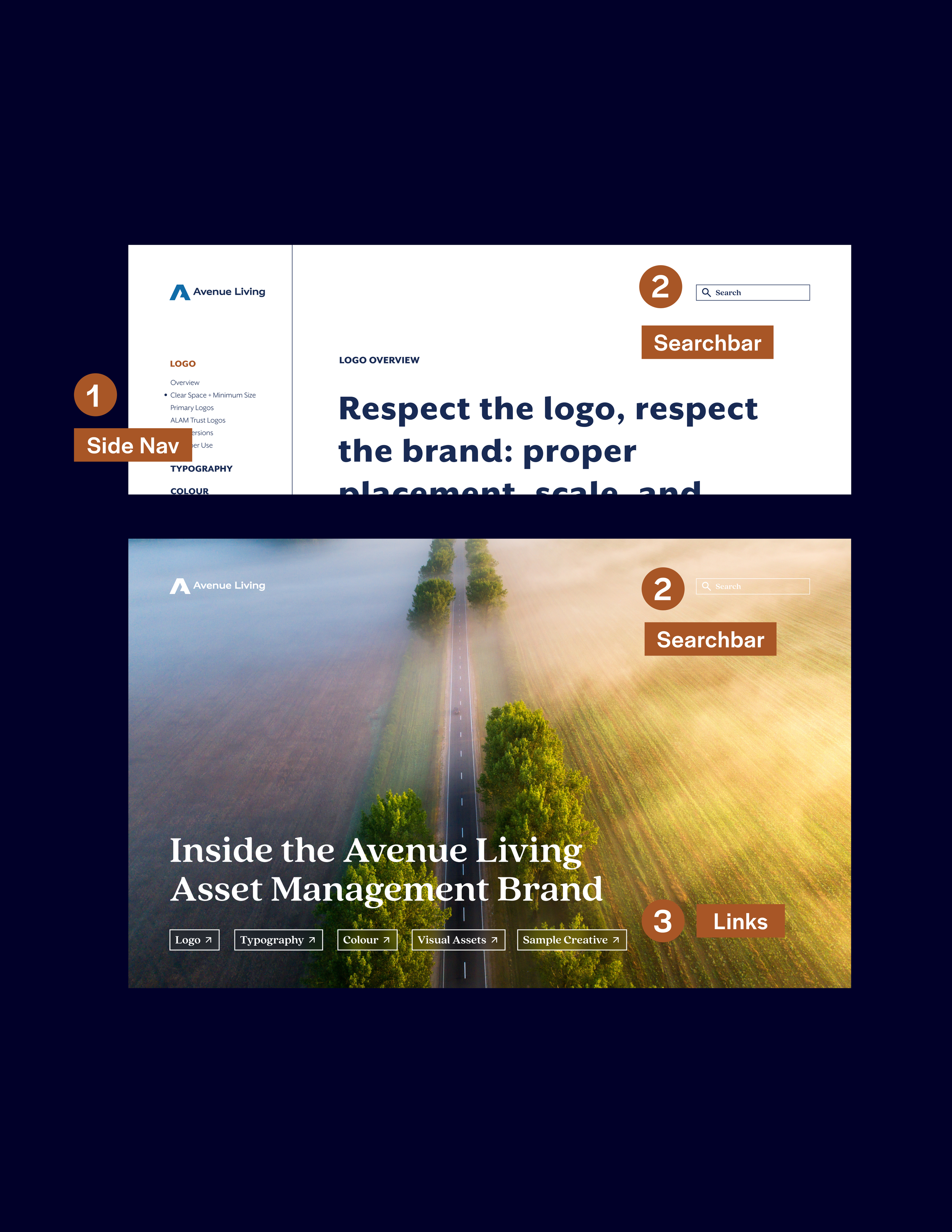
Navigation Methods
To support different user behaviours and levels of familiarity with the content, I designed multiple navigation methods across the experience. Users could browse through a persistent side navigation menu organized by category, use a global search to quickly locate specific information, or rely on contextual jump links within each section to move between related subtopics. This multi-layered approach ensured that both exploratory and task-focused users could efficiently find what they needed without friction.
Design Exploration
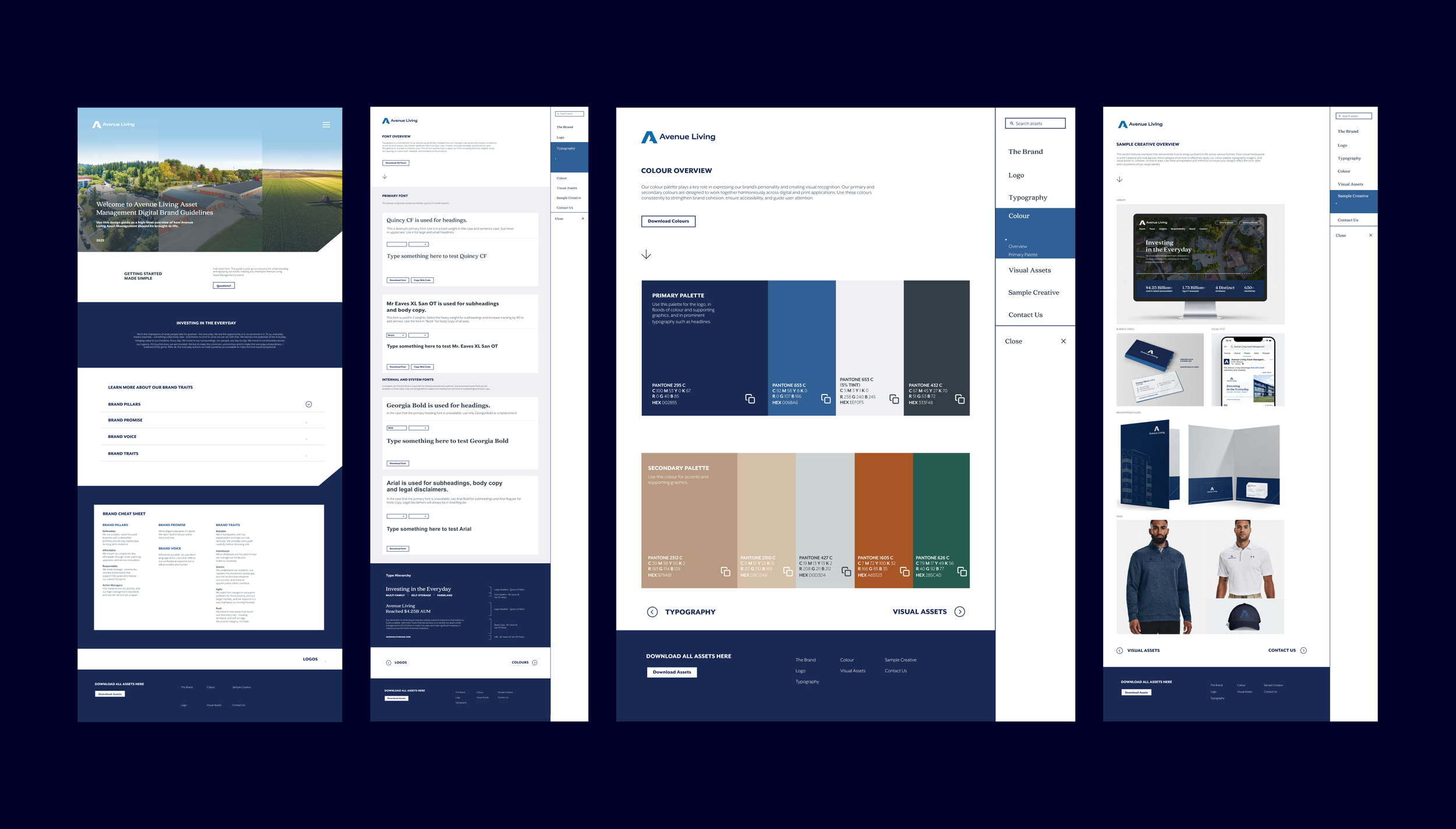
Exploration 1: Prioritizing Familiarity
I began by aligning the layout with the existing Asset Management website to maintain consistency and establish a familiar content structure. Following stakeholder review, the direction evolved toward a more distinctive and engaging experience as seen in further explorations, with an emphasis on creating a digital brand guideline that felt unique rather than closely mirroring the existing site.
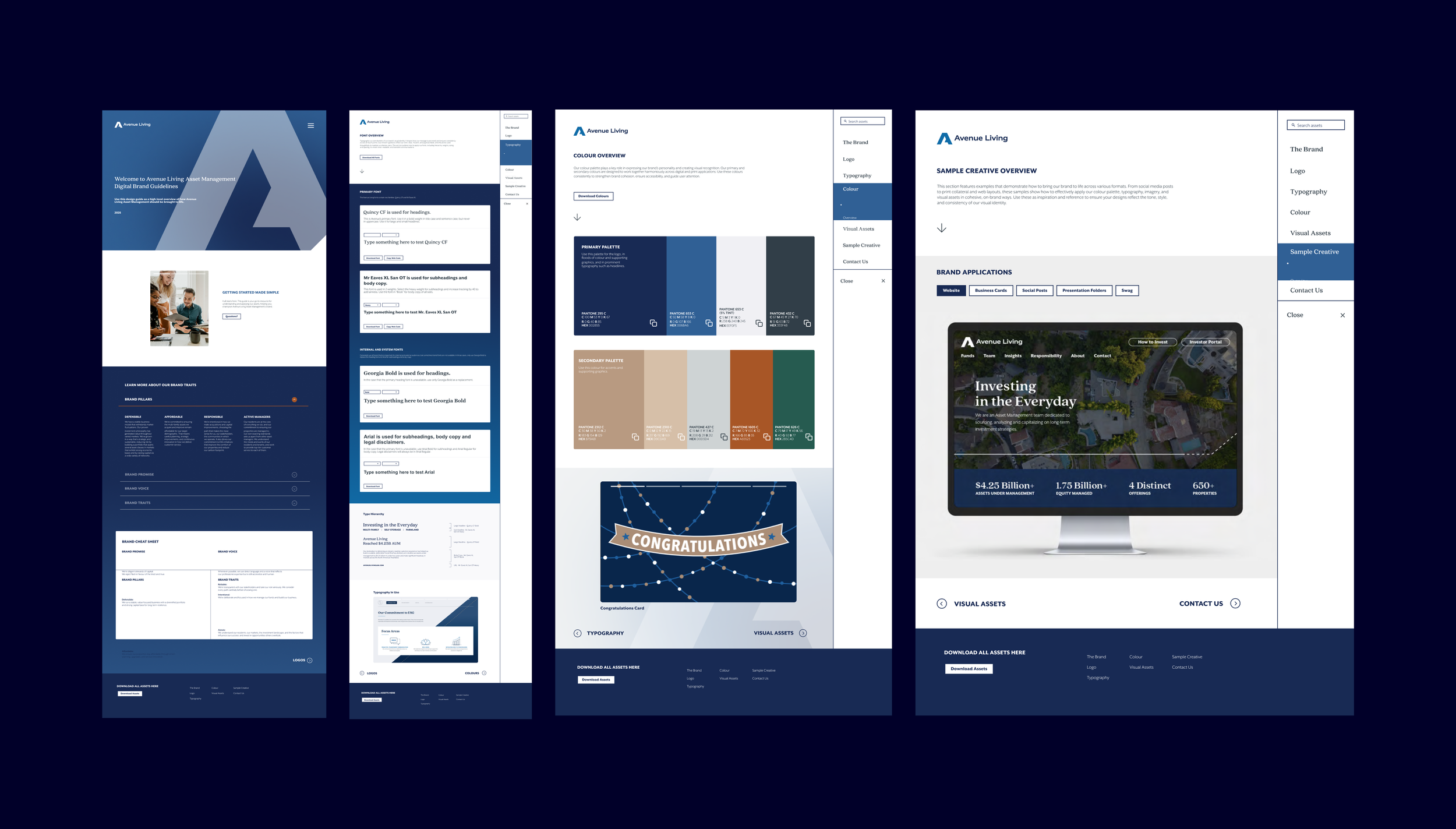
Exploration 2: Introducing Engagement
During this phase, I began exploring more immersive layouts that encouraged users to browse rather than simply read, using larger imagery, stronger visual hierarchy, and more dynamic compositions.
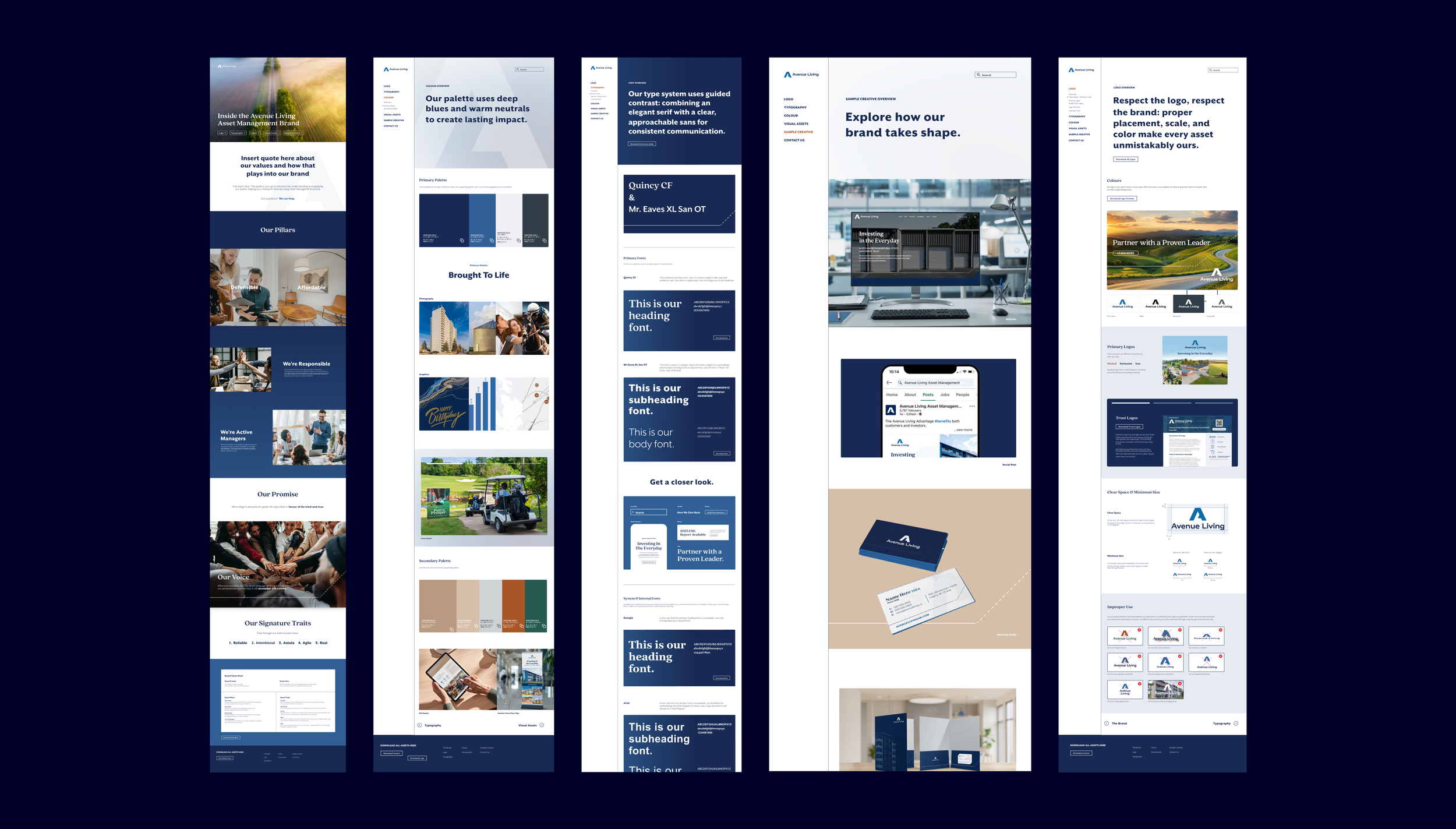
Exploration 3: Balancing Information & Inspiration
Building off exploration 2, I refined the experience into a design that remained structured and informative while showcasing the brand through rich visual examples and interactive content.
Key Design Decisions
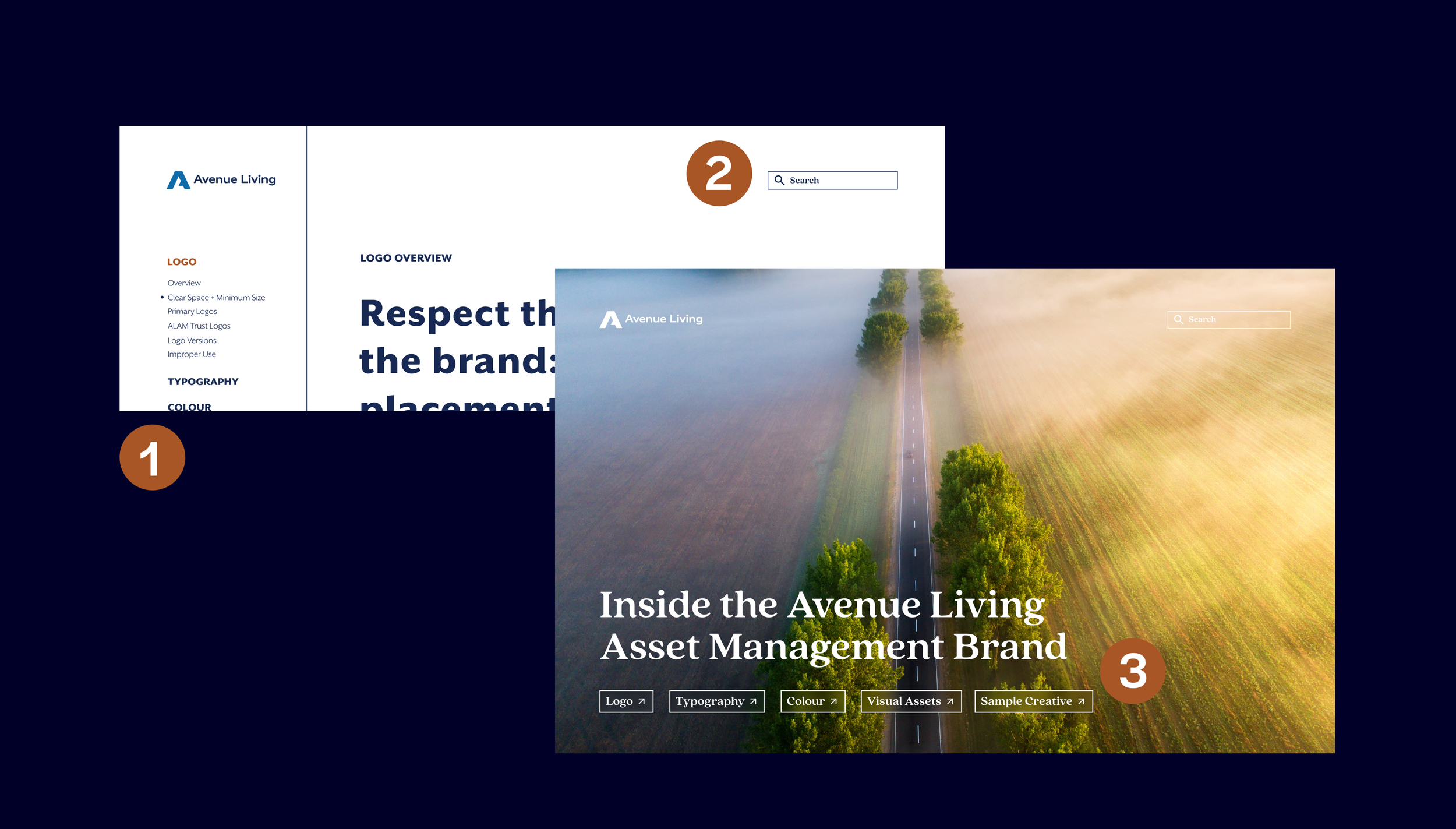
Navigation
Navigation was designed to support both exploratory browsing and task-based searching, recognizing that users would approach the guidelines with different levels of familiarity. A persistent side navigation provided a clear overview of all sections and subcategories, while global search enabled direct access to specific information. Within each page, contextual jump links further reduced friction by allowing users to move quickly between related topics. This layered system ensured that information remained easy to locate, regardless of how users chose to engage with the content.
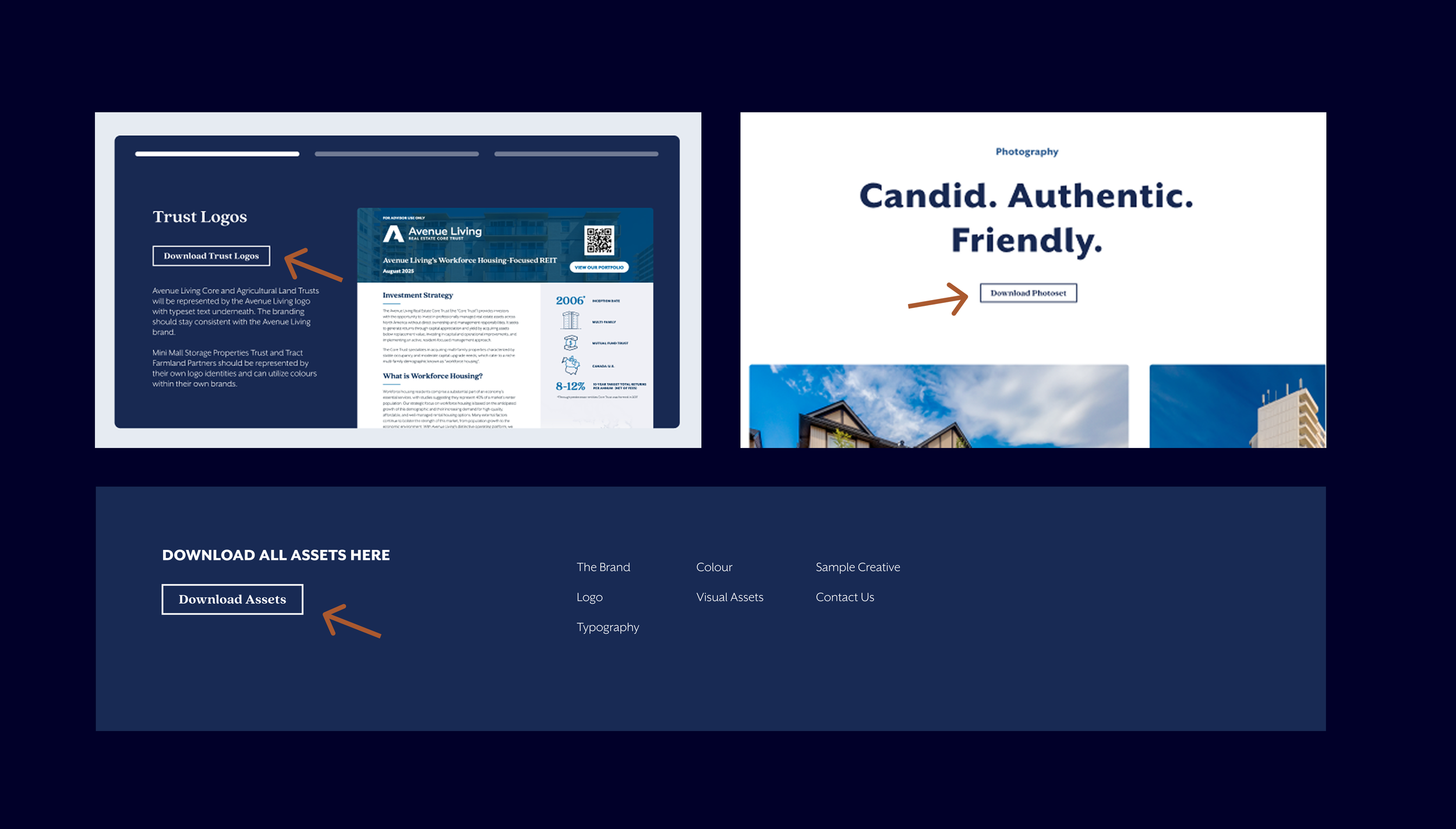
Asset Library
The asset library was integrated directly into the relevant guideline sections to reduce the need for users to search across multiple locations for brand resources. Each category included downloadable files such as logos, templates, and supporting design assets, allowing users to access and apply them immediately within their own work. A consolidated download option in the footer also provided access to the full asset set for users who needed a complete package.
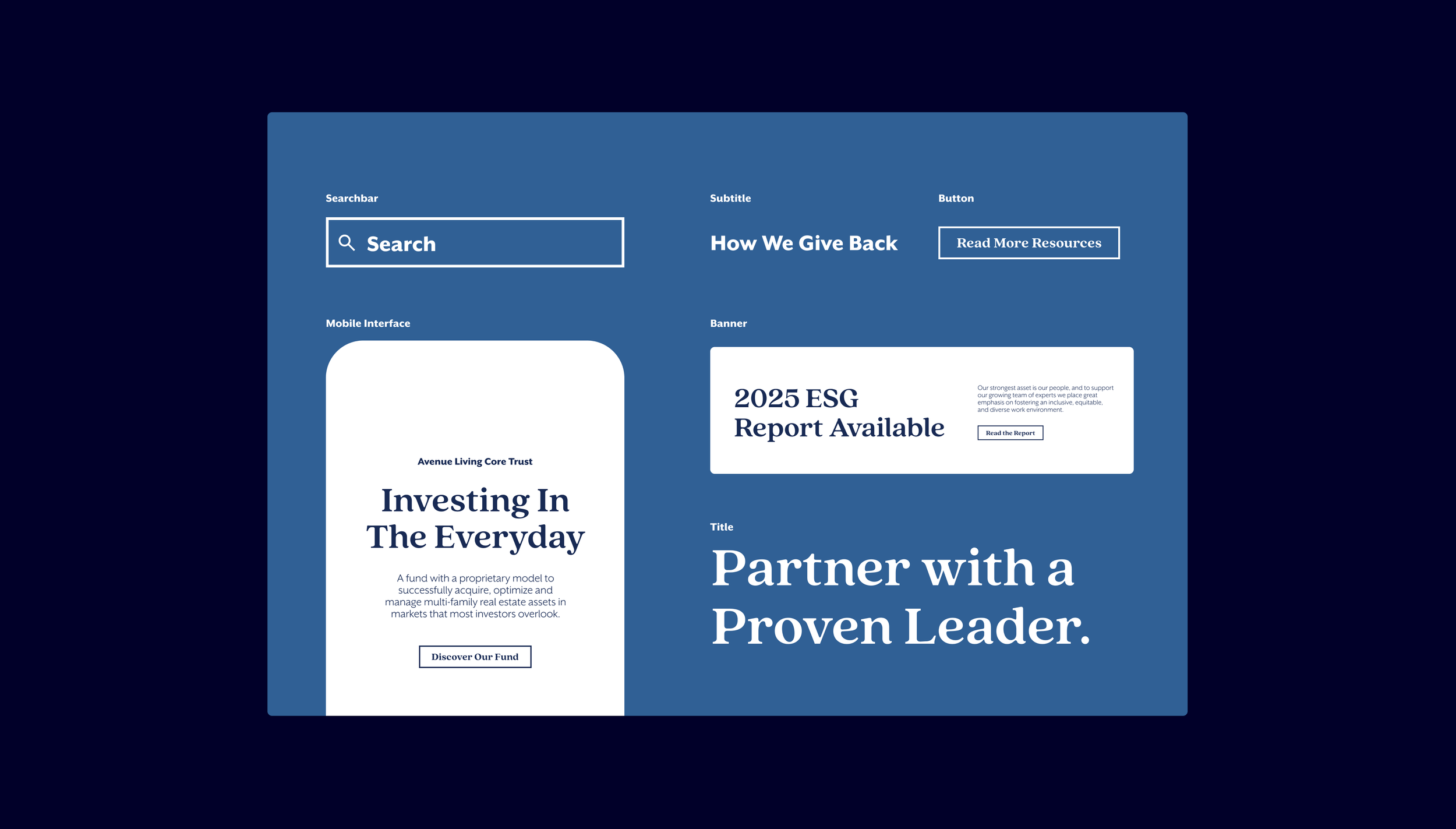
Teaching Through Examples
The guidelines incorporated teaching through in-context examples, where brand rules were directly applied within the interface itself. This helped users understand how principles such as typography, spacing, and hierarchy translate into real usage, reinforcing learning through demonstration rather than explanation alone.
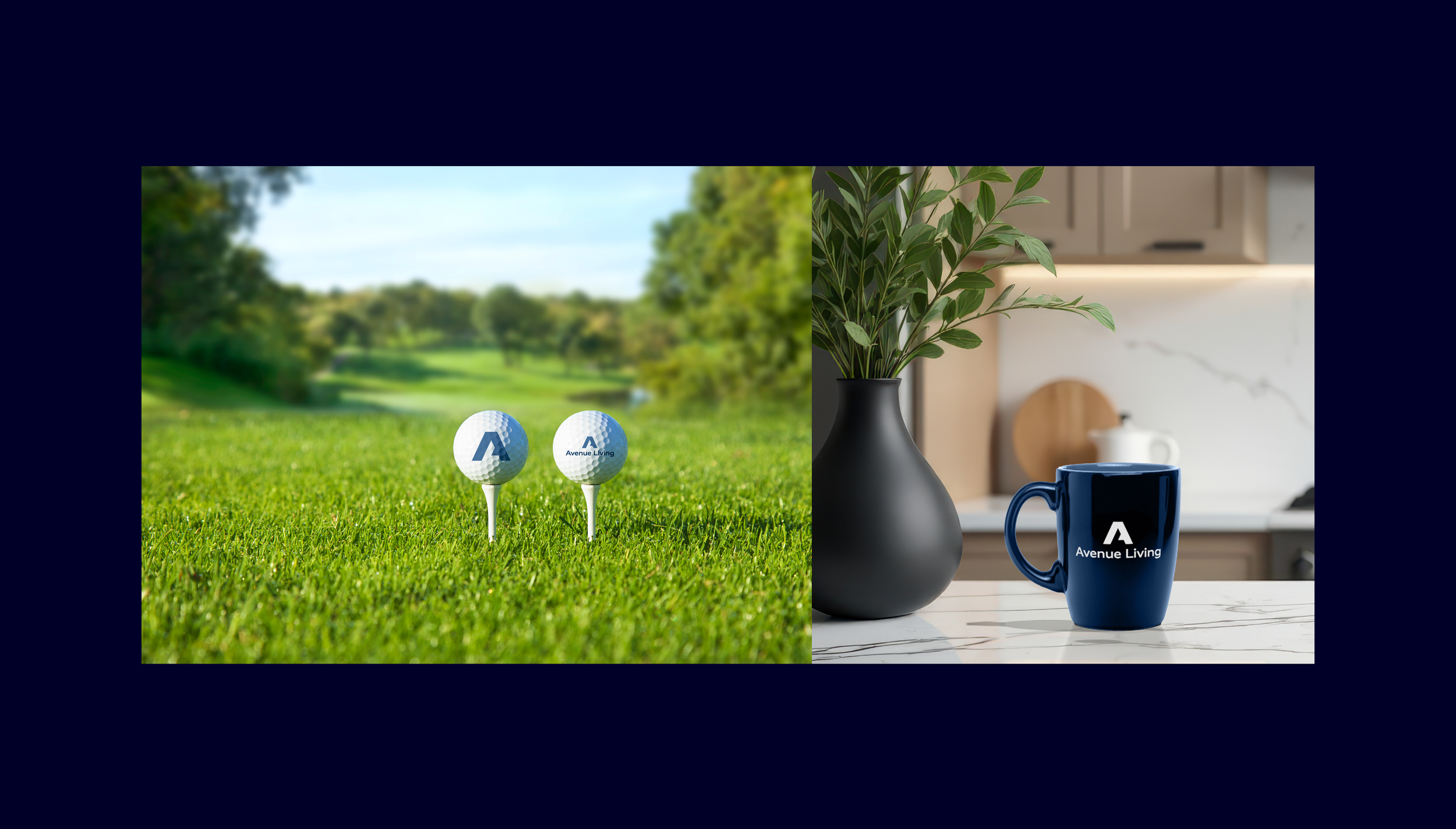
Sample Creative
The sample creative section was designed to bridge the gap between brand guidelines and real-world application by showcasing how the system comes together in complete, contextualized compositions. Rather than isolating individual brand elements, this section demonstrated how typography, colour, imagery, and layout interact within finished designs, helping users better understand how the brand should feel when fully applied.
Final Experience

Outcome
The digital brand guidelines became the central source of truth for the Asset Management team, making brand standards more accessible across departments. Employees could independently locate assets, reference usage guidelines, and confidently create on-brand materials without relying on the design team for routine requests.
By combining clear information architecture with engaging visual examples, the platform helped reduce ambiguity while encouraging greater consistency across event materials, presentations, and internal communications.
Learnings
This project reinforced that documentation is also a user experience. While brand guidelines are often viewed as static reference material, thoughtful information architecture and interaction design can transform them into educational tools that people genuinely enjoy using.
Looking back, one of the most rewarding challenges was finding the balance between structure and creativity, designing an experience that remained practical enough to support everyday workflows while feeling engaging enough to inspire confidence in the brand.